

Why are pp spunlace nonwovens preferred for isolation in medical applications?
In the medical field, PP Spunlace Nonwoven Fabric (Polypropylene Spunlace Nonwoven Fabric) is often the material of choice, especially for disposable medical supplies such as surgical gowns, masks, drapes, and isolation gowns. The primary reasons for its preference lie in its unique physical and chemical properties.

Here are the key reasons for choosing PP spunlace nonwoven fabric:
Polypropylene Material Properties: PP material has inherent antibacterial properties and resists the growth of bacteria and microorganisms. This is crucial in medical environments as it helps reduce the risk of cross-contamination.
Efficient Nonwoven Fabric Structure: The spunlace process creates a dense and uniform fabric structure, which is less likely to collect dust and dirt, further enhancing its antibacterial performance.
Strong Breathability: PP spunlace nonwoven fabric has good breathability, making it suitable for medical supplies that need ventilation, such as surgical gowns and masks. Breathability helps maintain comfort for the wearer and reduces heat build-up during extended wear.
Soft and Non-Irritating: The fabric is soft and less likely to irritate the skin, making it ideal for medical supplies that come into direct contact with the skin.
Tear and Puncture Resistance: Medical supplies need to maintain high strength and durability to prevent tearing or rupturing during use. The high-strength properties of PP spunlace nonwoven fabric ensure it can withstand pulling and friction during use.
Good Dimensional Stability: The material undergoes special treatment during production to ensure excellent dimensional stability, maintaining its shape and strength even in humid or high-temperature environments.
04.Water and Moisture Resistance
Liquid Barrier: In medical procedures, blocking bodily fluids, blood, and other liquids is essential. PP spunlace nonwoven fabric can be treated to provide effective liquid barrier properties, protecting healthcare workers and patients from liquid contamination.
Moisture Control: While blocking liquids, the fabric's breathability allows water vapor to pass through, helping to keep the skin dry and avoid eczema or infection risks.
Convenient for Disposable Use: PP spunlace nonwoven fabric is typically used as a disposable product, avoiding the cross-contamination risks associated with reuse. This is especially important in the medical field to ensure cleanliness and hygiene for each use.
Environmental Considerations: Although disposable, PP spunlace nonwoven fabric can be recycled or incinerated to minimize environmental impact.
06/.Low Production Costs and Scalability
Cost-Efficient: Compared to traditional textiles, PP spunlace nonwoven fabric is produced at a lower cost, with efficient manufacturing processes that meet large-scale medical demand.
Highly Customizable: The fabric can be customized for various medical needs in terms of thickness, strength, and breathability, adapting to different application scenarios.
What materials are commonly used as isolation in medical applications?
Choosing isolation materials in the medical field is crucial, requiring considerations of antibacterial properties, breathability, water resistance, comfort, and cost. Here are some commonly used isolation materials:
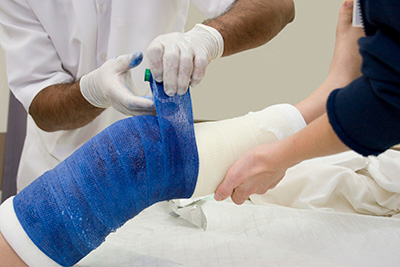
1.PP Spunlace Nonwoven Fabric
Antibacterial: Naturally antibacterial, reducing infection risks.
Breathable: Suitable for extended wear.
Water Resistant: Effective liquid barrier, prevents contamination.
Uses: Widely used in surgical gowns, masks, drapes, etc.
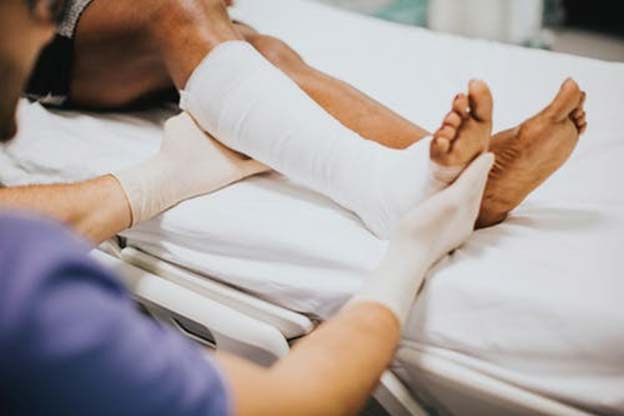
Three-Layer Structure: Combines spunbond and meltblown processes for excellent protection.
Antibacterial and Water Resistant: Meltblown layer offers good filtration and water resistance.
Uses: Commonly used for surgical gowns, isolation gowns, medical masks, etc.
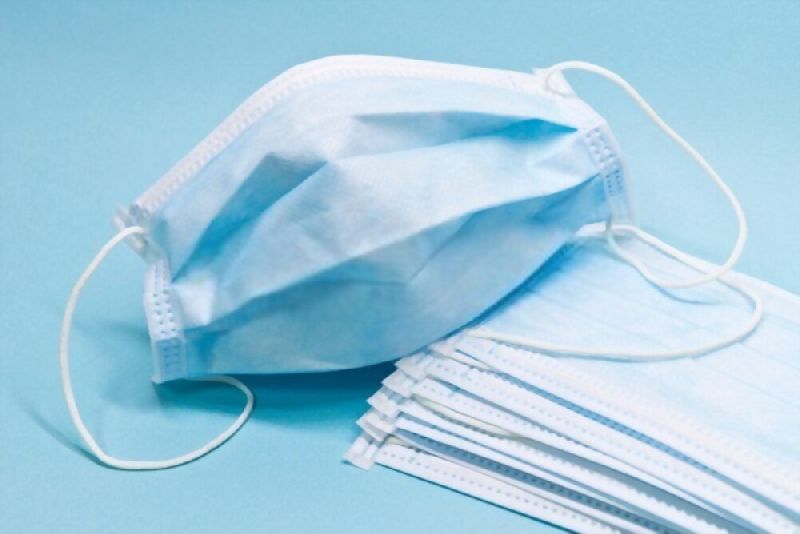
Water and Oil Resistance: Coated surface provides good water and oil resistance.
Durability: Suitable for reusable isolation garments.
Uses: Isolation gowns and aprons in high-risk environments.
4.PE Laminated Nonwoven Fabric
Water Resistant: PE film provides an efficient water barrier.
Breathability and Comfort: Combined with nonwoven fabric for both water resistance and breathability.
Uses: Surgical gowns, isolation gowns, protective clothing, etc.
5.Polyurethane (PU) Coated Fabric
Softness and Elasticity: Comfortable and flexible for long-term wear.
Water and Breathability: Combines waterproof and breathable properties to reduce heat build-up.
Uses: High-performance protective clothing, isolation gowns.
So what are the products of pp spunlace nonwovens in the medical field?
PP spunlace nonwoven fabric has a wide range of applications in the medical field, thanks to its excellent physical properties, hygiene features, and relatively low production cost. Here are the primary applications of PP spunlace nonwoven fabric in medicine:
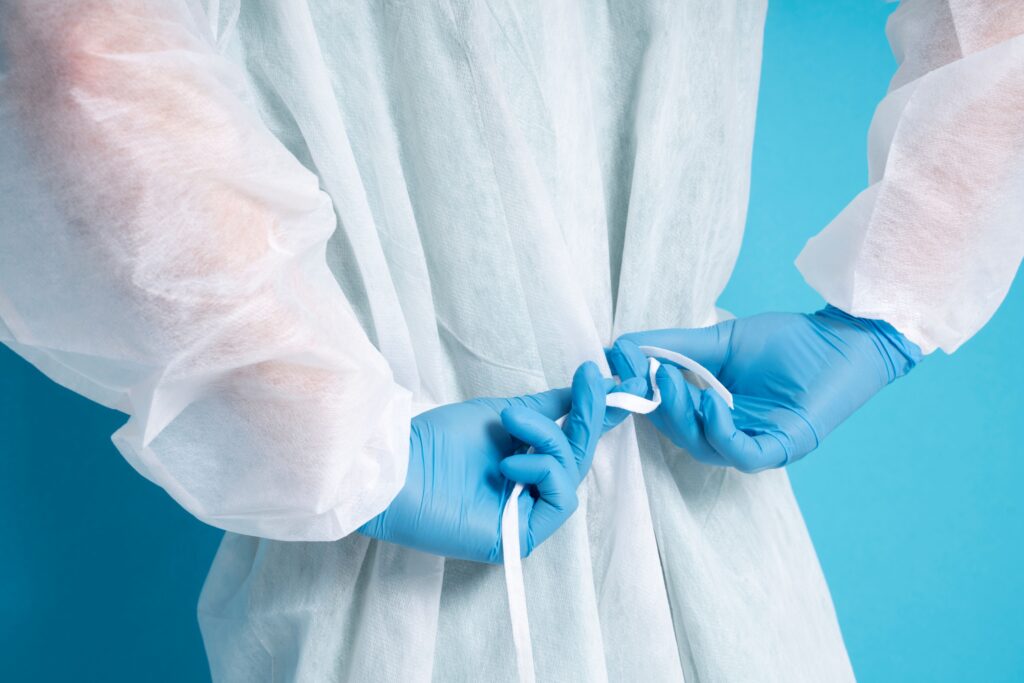
Surgical Gowns and Isolation Gowns
High Protection: Provides strong liquid barrier properties to prevent the penetration of blood, bodily fluids, and other contaminants, protecting healthcare workers and patients.
Good Breathability: Ensures comfort while providing protection, reducing heat build-up during prolonged wear.
Disposable: Cost-effective for single-use, avoiding cross-contamination.
Medical Masks
Filtration Performance: Widely used in the middle layer of masks to filter out airborne particles, bacteria, and viruses, offering good respiratory protection.
Lightweight and Comfortable: Soft PP material provides comfort and reduces skin irritation.
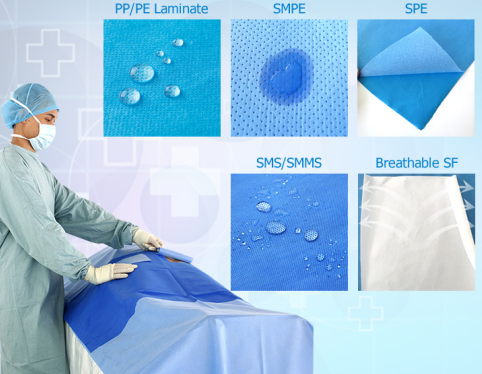
Surgical Drapes and Towels
Sterile Packaging: Used to package surgical instruments, ensuring a sterile environment. Surgical drapes and towels cover the operation area to reduce infection risks.
High Absorbency: Effective in absorbing bodily fluids during surgery.
Disinfecting and Cleaning Cloths
Antibacterial Treatment: Can be treated with antibacterial agents for use as disinfecting and cleaning cloths, playing an important role in hygiene and sanitation.
Low Fiber Shedding: Smooth surface reduces fiber shedding, preventing secondary contamination during cleaning.
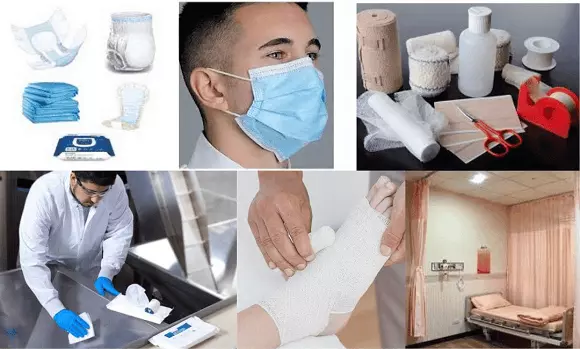

Dressings and Wound Plasters
Breathability and Water Resistance: Provides a balance of breathability and water resistance to promote wound healing while protecting against external moisture and bacteria.
Softness and Comfort: Ensures comfort and minimizes irritation for patients.
Medical Bed Linens and Pillow Covers
Cleanliness: Used for disposable bed linens and pillow covers to prevent cross-contamination, especially in operating rooms and patient wards.
Easy Replacement: Simplifies hospital hygiene management with disposable use.
Isolation Shields and Caps
Comprehensive Protection: Lightweight and breathable, isolation shields and medical caps made from PP spunlace nonwoven fabric provide full coverage to prevent contamination from hair, sweat, and other potential pollutants.
What are the advantages of these products during application?
PP spunlace nonwoven fabric is widely used for surgical gowns, medical masks, disinfecting cloths, dressings, and other disposable medical supplies. Its unique production process and polypropylene (PP) fiber characteristics provide several advantages, though there are also some drawbacks.
Advantages:
High Strength and Durability
PP spunlace nonwoven fabric offers high strength and durability, able to withstand various stresses and wear in medical environments, ensuring stability and safety during use.
Good Breathability
The material's breathability helps reduce discomfort during procedures and effectively prevents infections.
Excellent Water and Moisture Resistance
Specially treated to offer good water and moisture resistance, blocking liquid penetration and preventing contamination from bodily fluids and other liquids.
Antibacterial Properties
Polypropylene fibers have inherent antibacterial properties, and further antibacterial treatments effectively reduce microbial growth and lower infection risks.
Lightweight
Due to the lightweight nature of PP fibers, spunlace nonwoven fabric products are generally lighter, offering higher comfort, especially during long-term wear.

Low Cost
The production cost of PP spunlace nonwoven fabric is lower, making it suitable for large-scale production of disposable medical supplies, offering cost efficiency.
Easy to Process and Shape
The material is easy to cut and process, allowing for the creation of various shapes and sizes of medical supplies to meet different clinical needs.
Disadvantages
Limited High-Temperature Resistance: The material may deform or degrade under high-temperature sterilization processes (e.g., steam sterilization), affecting its performance, leading to its typical use as a disposable item to avoid cross-contamination and save on sterilization costs.
Limited Reusability: While durable, the material is generally used for disposable applications, which may limit its use in certain scenarios.
Poor Natural Degradation: Although recyclable, PP spunlace nonwoven fabric has poor natural degradation, potentially posing environmental challenges if not properly managed.
Comfort Level: Compared to natural fibers like cotton, PP spunlace nonwoven fabric may feel less soft, though it is improved through treatment, it still may be less comfortable for direct skin contact.
Summary
In the medical field, choosing isolation materials is crucial and typically includes PP spunlace nonwoven fabric, SMS nonwoven fabric, coated fabrics, PE laminated nonwoven fabric, and PU coated fabrics. These materials are widely used in surgical gowns, masks, isolation gowns, and other medical protective equipment due to their antibacterial properties, breathability, water resistance, comfort, and cost-effectiveness. PP spunlace nonwoven fabric, in particular, stands out for its excellent antibacterial properties, good breathability, high strength, and water resistance, making it a preferred choice for disposable medical products.
PP spunlace nonwoven fabric is extensively used in medical applications, including surgical gowns, medical masks, surgical drapes, disinfecting cloths, and dressings. Its advantages include high strength, good breathability, water and moisture resistance, antibacterial properties, lightweight nature, low cost, and ease of processing. However, it has limitations in high-temperature environments, limited reusability, poor natural degradation, and may have less comfort compared to natural fibers.